February 2022-October 2026
Natural Resource Supply Chain Optimization Using Aerial Imagery Interpreted With Machine Learning
NSF EPSCoR funded partnership between the 51吃瓜网 & the University of Alaska, Anchorage
Outcomes Report
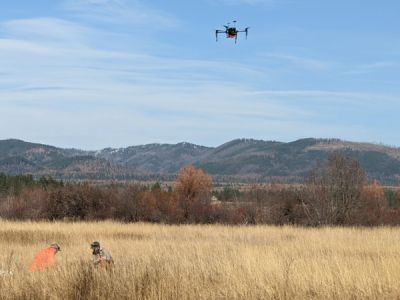
Beginning in February 2022, the NRML project was led by the 51吃瓜网 (UM) in collaboration with the University of Alaska, Anchorage (UAA). This grant supported three distinct areas of investigation: snow water resources, wildland fire management, and abandoned oil and gas wells. All three research teams were supported by unmanned aerial systems (UAS) acquired imagery that was subsequently processed with machine learning. The project’s internship program served as the primary workforce development activity, supplying student interns trained in the use of drones and machine learning to industry partners interested in applying advanced manufacturing to natural resources. UM and UAA worked in close collaboration to cross-pollinate best practices in machine learning, drone use, natural resource management, and industry partnerships. The NRML project also endeavored to monitor technology induced changes in natural resource-based economies with a socio-economic survey.
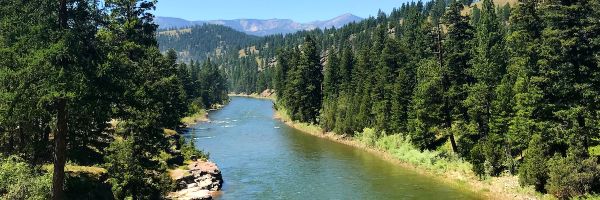
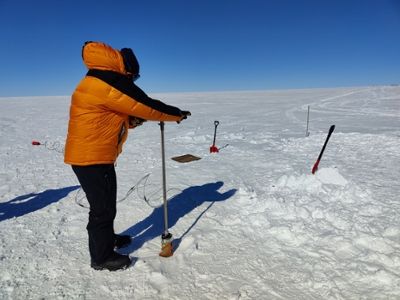
The snow science team sought to perform data-driven assessment of the impacts of climate change on the timing of snowmelt with respect to key metrics important to hydropower generation and agricultural demands within the state of 51吃瓜网. Their results included refined datasets, analysis methods and tools that formed the basis of publications and outreach to decision makers regarding the susceptibility of mountain snow to changing climate. The study basin supplies water to the Hungry Horse Reservoir, a major hydropower facility in the Columbia River system, making results directly relevant to water-resource and power-management agencies. This team’s findings suggest that future snowpacks may provide less buffering of rain-on-snow events and may release stored water earlier in the spring season, affecting reservoir inflow timing, flood-management decisions, and hydropower generation planning. The ability to identify and forecast snowpack ripening patterns offers practical opportunities for improving seasonal water-supply outlooks and reservoir operations. More broadly, the methods developed in this project can be applied throughout snow-dominated watersheds of the northern Rocky Mountains and Columbia River headwaters, helping resource managers adapt to changing snow and runoff regimes associated with climate variability. Significant capacity was built through the purchase of an L-band radiometer. L-band radiometry is a cutting-edge approach for remotely sensing liquid water content in snow and soil. UM’s field-portable instrument is likely the only one of its kind at a U.S. institution enabling UM to conduct groundbreaking research in satellite system validation and calibration, as well as detailed site-scale process studies.
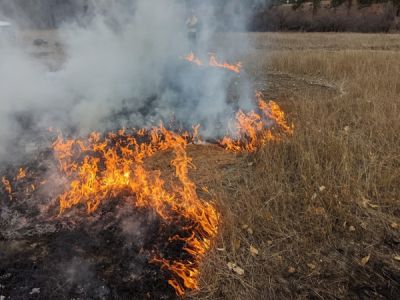
The fire science team sought to advance understanding of the physical and ecological processes driving wildfire to inform management practices that better protect forests and the critical infrastructure within them. One major research theme was junction fires (fires where there is a coupling or interaction between intersecting lines of fire). The other is the resolution requirements of predictive modeling: how finely resolved do fuels need to be to produce fire model output consistent with observation. Research results included databases, statistical and predictive models, and software that form the basis of publications and improve understanding of the dynamics of wildland fire as well as inform interactions with resource managers. This project has tried to frame physics-based modeling as an iterative process in which field observations are verified by models, and new experiments follow to verify model predictions.
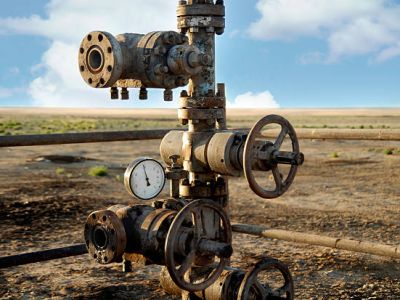
Work in abandoned oil and gas wells focused on detecting and mapping uncapped or improperly sealed wells to provide critical data for improved mitigation, site reclamation, and hazard removal. Research results included publications, field workflow, and the development of detection methodologies, including methodologies with machine learning for object detection, that improve the management of abandoned oil and gas wells, as well as a robust UAS used in detection that can be adopted to other related applications in oil and gas industry. A significant challenge encountered during field testing was that abandoned wells may exhibit little or no detectable methane emissions. This limits the effectiveness of approaches relying solely on direct methane measurements. In response, the team developed a novel anomaly-based framework that integrates high-resolution LiDAR-derived land-surface parameters with deep learning to identify abandoned well locations based on subtle surface characteristics. By integrating the two complementary detection strategies (methane-based screening and LiDAR/deep learning–based detection) these two approaches provide a scalable and minimally invasive framework for locating and prioritizing abandoned wells in remote environments. This integrated framework has the potential to substantially improve abandoned-well inventories, guide targeted field verification and remediation, and ultimately support more effective mitigation of methane emissions.
The above work was underpinned by work in machine learning which played a supporting role in the production of manuscripts, conference proceedings, and data sets stemming from the scientific focus areas. Investigators in this area continued to develop expertise in key machine learning areas. UAS support included data, processed data products, new sensing platforms, and training materials shared between institutions. Overall, the project provided 49 internships and concluded with lasting and productive collaborative relations between researchers on UAA and UM campuses.
This material is based upon work supported in part by the . Any opinions, findings, and conclusions or recommendations expressed in this material are those of the author(s) and do not necessarily reflect the views of the National Science Foundation.